Thursday, July 19, 2012

Dell Ideastorm: Groundbreaking crowdsourcing platform, atrophy, and 2012 renewal


In February 2007, Dell launched a groundbreaking ideation (and community engagement) crowdsourcing platform called Ideastorm.   In 2012, Dell updated Ideastorm in response to a community challenge to re-engage.  This story highlights that a company’s Social Media Strategy involves continuous engagement and renewal as well as rigor.   Robert Wollan et al. argue that rigor, part of the 5th “P” (People) of a Social Media enabled Marketing Mix, involves consistency and reliability of a company’s operations and how those operations deliver the right customer experience via Social Media.

Since Jeff Howe coined the “crowdsourcing” term in 2006, there has been a proliferation of applications and business models leveraging the “power of the crowd.”  Open Innovations and Ross Dawson provide good market mappings.    A number of corporations, ranging from Lego, Threadless, Starbucks, and Dell operate platforms targeted at engaging their customers for product, services and brand feedback.  The potential values include (1) greater customer involvement, engagement and Loyalty, (2) timely and richer, direct customer feedback, (3) higher granularity customer insight, and (4) access to new sources of ideas, potentially customer brainstormed.   

Ideastorm, essentially an online suggestion box, was unique when it launched during the early days of Social Media.  It was viewed as a bold, groundbreaking corporate initiative - enabling customers to openly engage Dell and each other (providing both negative and positive Dell feedback).  It was built on Salesforce.com’s Ideas platform and featured an ideas voting/tagging system which was novel at the time.   Voting enabled community based ideas filtering.  An initially skeptical, Howe, would even later gush about Dell’s success.   Some of the key issues (loss of control concerns, change management, leadership involvement, competitive intelligence issues, ROI, etc.) for Social Media strategies highlighted by Wollan et al. are addressed in Dell’s Vida Killian video and written interviews.  Some success contributors included CEO drive (it was Michael Dell’s idea), Dell’s Direct to Customer Culture, and Dell’s Social Media culture change underway to address its earlier Dell Hell and related publicity fiascos that inflicted reputational and financial damage.  Negative or positive conversations were going to happen with our without Dell.  It was better to be involved.   Ideastorm was part of a Social Media strategy that ultimately would see Dell named 2011’s #1 most social brand of 100 top brands.   Over the 4 years since its inception, Ideastorm generated 15,000 idea submissions, 490 of which were implemented resulting in $100s of Millions ($10,000 average value per idea).  Members generated approximately 50% more revenue than non-members with over 50% in the top decile of LTV scores.

Six Years of Experiments and Experience
(Source:  B. Johnston, Dell)
 
As Dell slowly shifted focus from its on-board platforms, Ideastorm became a victim of its own success.   Dell’s participation waned, the platform atrophied, and ideas piled up.   Many diehard members stayed, engaging each other despite Dell.  Advocates turned into critics.  Dell’s Bill Johnston notes that “They thought that Dell had become disrespectful.”   Dell took notice.  End-Of-Life or renewal?   An analysis of corporate benefits and customer needs resulted in the March 2012 launch of an updated Ideastorm.   The platform was modernized including better profile integration with other Social Media platforms.  New tools were introduced to improve voting, idea triaging, idea archival, and idea evolution (iteration and mashups).  Better contributor recognition was introduced including from the Dell Community Rockstar program.  Most importantly, the backend process was improved with greater Dell Idea Partners involvements - more Dell representatives as well as 28 corporate partners, that represent various stakeholder divisions. Dell even hired one of its advocate-turned-critic to help improve community engagement.


Ideastorm 2.0 Platform
(Source:  B. Johnston, Dell)


Ideastorm 2.0:  Updated Idea Management Process
(Source:  B. Johnston, Dell)
Note:  Ideastorm 2.0 incorporated some SBUX best practices.  Ironically, Michael Dell had earlier shared his experiences with Howard Schultz to help them build SBUX's mystarbucksidea platform.  Both use Saleforce.com's Ideas platform.
 

Wildfire for Social Media Marketing

Are you a start-up or small business looking to gain new and retain already existing customers? Or are you in a large corporation trying to increase/maintain your market share or start world domination? Employing the use of social media networks is definitely a step in the right direction to actualize those goals

Social media is any platform that allows the interaction, sharing and editing of  information between two or more persons on the internet. http://bit.ly/OkVVNl

                                    Image from http://bit.ly/M7SAVA


According to knowem.com, there are over 500 social networking sites online, ranging from social networks, blogs, microblogs, multimedia sharing and discussion forums http://bit.ly/NwkzKD


The figures above show just 4 of these social networking sites…..any marketer, business, service provider is definitely going…."i need to tap into that large, already congregated pool of potential customers!!!!"

Social media has changed the dynamics in business, customer interaction; the way businesses market, sell and communicate their products and services.


Some businesses that have used social media/network successfully http://on.mash.to/ODwpDT

The challenge for businesses now is how to efficiently and effectively use social media tools to equate higher sales and profits.


Social Media Management Tools

Social media management tools refer to the software solutions at the disposal of businesses that use social networks for the startup, growth or development of their businesses to run them efficiently and effectively.
Examples of social media management tools; http://bit.ly/NmDI6e


We shall consider the social media tool; Wildfire application; www.wildfireapp.com  in this post.


Wildfire for Social Media Marketing

Wildfire can be used on Facebook, twitter, LinkedIn, you-tube among a few.
Social Media Application PageS Manager
All social media network accounts of a business can all be housed and managed on a single unified page on Wildfire. Singular messages can be sent (or scheduled to send) to numerous social media applications. Customer relationship management; receiving and addressing customer issues and requests become easier as everything is in one place!

Social Media Promotions
A bargain or a freebie is very hard if not impossible for people to turn down. Marketers and businesses have been using this fact to reel in customers for ages! Finally, a tool is now available to duplicate such practices online!
With Wildfire, social promotions can be created, implemented and maintained on several social media applications concurrently. Contests, coupons, trivia, quizzes, sweepstakes and group deals, all of which help increase product/service awareness, increase online following and customer loyalty.

Social Media Business Intelligence and Analytics
Wildfire measures Social Media performance; online engagement data on each message or post, fan and follower growth over time. Performance is also benchmarked with competitors in real time. It also gives suggestions on how to improve social media presence and impact. Who to interact with (brand ambassadors), engaging topics etc.

Wildfire is a very valuable tool to both small and large businesses seeking to use social media networks to market and increase product awareness and loyalty.
Businesses like Zappos, Jamba Juice, Duck Tape, Edible Arrangements (run by Digital Surgeons) all ran promotions online using Wildfire and were very successful in increasing followers and raising revenues.  http://bit.ly/MtepND


Twitter is useful for Business

Twitter - not only for personal status updates

Twitter is mentioned a lot in the news, but in my experience, many people still have that cliche of twitter expressed with “I don’t care what someone ate for lunch or where he is going right now!” phrase.

So, I was surprised to find out that Twitter has some unique features, extremely useful for businesses. The applications can range from announcements to promoting your blog posts and press releases to monitoring the information about your industry. And in each of these applications, Twitter offers some unbeatable advantages compared to other channels.


A bit steep learning curve

Twitter has it's own lingo, and culture. I did open Twitter account and was not using it for couple of years. It's not like Twitter is lacking on the growth, but viewing the instruction video as the one below, would save you from a lot of friction with this tool. Twitter’s own Best Practices for businesses provide short and clear list of things that will put your company on a good track with Twitter.


Applications for Twitter in Business world

Super fast announcements

twitter best practices maximizing your tweets infographic Restaurant or other business could post their specials. Posting rebates codes will keep your followers in high alert state. Besides, the open nature of Twitter allows for infinite retweets (if the deal is super attractive). Some goods that have expiration date, such as tickets to events or travel can be pushed through this channel with great success. Announcing the new location or time for any temporary sales or service points is another possible venue.

Reaching out to your customers

Sending a tweet with a simple question may not substitute the full blown marketing study, but you are getting very valuable feedback directly from your existing or potential customers in minutes, not days or months.

Be a source of relevant content

Sometimes, it is hard to find knowledgeable stuff to write a lot of text, but with Twitter you do not need that. The tweet is 140 characters long, and considering the link, and couple of hashtags - it's even shorter.
You are probably aware of the market environment, new trends and there's something you can do to become a source of relevant information for your followers. Send the links to the content that you find relevant to your industry and your company might become a trusted authority in a field. Next time you put the press release out - there will be more people actually reading it.

Monitoring what's happening out there

You can use search to get real time comments about your brand, company and competitors. It is possible to get this information right to your desktop or smartphone and have an opportunity to respond. Applications such as TweetDeck make the task easier by storing the search query and keeping it updated.
You can monitor the competitors as well, and use any opportunities to acquire new customers or respond to strategic moves. Other technologies might slow you down by days, and in today's world - it's might as well be forever.
If the other businesses and people you are dealing with have Twitter accounts - chances are you can find the talking points in their tweets and increase your chances to strike the right chords and make a sale or seal the partnership.

Practical advice to get started

The topic of Twitter for Businesses is quite popular today and there's a lot of great resources with more detailed information. Here are several resources that I find very clear and useful on a subject:
The infographic at the right provides some useful hints how to make sure your tweets are seen by more people (click on it to see bigger version). Stats indicate that posting during the day or on the weekend, using hashtags and asking for retweat when appropriate can significantly increase the reach of your messages.

Online Communities Put Bums in Seats for Arts Organisations

Blurring the line between artists and audience members, offering participatory performances are key themes in the art world nowadays. With the use of social networks, astute arts managers are creating online communities addressing these key issues and increasing the number of bums in seats!

About Online Communities:
Online communities congregate around a shared interest that can be spread across multiple channels (Facebook, Twitter, YouTube, etc).  They can have different definitions and take different shapes, but they universally share some or all of the following characteristics:

  1. Content (articles, information, and news about a topic of interest to a group of people); 
  2. Communication in a delayed fashion (using Forums or newsgroups and email); 
  3. Instant Communication (Chat and instant messaging).


American online community researcher, Amy Jo Kim has developed an influential conceptual framework called Membership Life Cycle for thinking about the behavior and movement of members within online communities. 


Use social Media to Cultivate Relationships:
Founder and editor of ArtsJournal,  Douglass McClennan argues that "using social media as just an opportunity to sell tickets is a bad strategy, the electronic equivalent of junk mail (...) the idea is to cultivate relationships with an audience that is increasingly online." Many arts organisations have understood those principles and are using Facebook, YouTube and Twitter to create online communities, which have transformed their business models and attracted new audiences.


Moliere on Twitter (TNM):

https://vimeo.com/12752408
Moliere on Twitter gained 1,000+ subscribers
Théâtre du Nouveau Monde (TNM) with Le Bourgeois Gentilhomme’s campaign is now a classical example of great success at creating an online community around a play. The campaign won Prix Média 2010 from Infopresse in the category “Unique interactive media approaches”, and was the Winner for Best Use of Micro-Blogging Platform at the 2010 Bees Awards (1st international social media competition (ISMC)).


TNM's Campaign:
TNM offers classical theatre which may be seen as “old and corny by younger generations”. Pairing the traditional with the modern, TNM “became a symbol of modernity by making Twitter the hub of a viral communications strategy where the characters from Le Bourgeois Gentilhomme came to life on this social network: in 140 characters or less, Molière’s characters introduced themselves over a month to a new clientele by tweeting away frivolously in classical French verse.” ISMC.


presented by Lorraine Pintal TNM Artistic Director

The objectives were of creating excitement around the play, attracting a new clientele to classical theatre, learning to better take advantage of social networking and supporting the sale of tickets for the 24 shows. The play protagonists attracted a total of 1,045 subscribers on Twitter sending over 1,000 tweets. Primary and secondary visibility reached more than 660,000 people. Since Twitter usage is free, TNM invested in content generation rather than in media placement.  Four sold out shows were added during the campaign. “The originality and never-seen-before character of the initiative had an impact extending Canada-wide in the Web media and the traditional press, equivalent to a placement campaign worth tens of thousands of dollars.”

Other Artistic Online Communities:
Other arts organisations had notable social media success, like the Anaheim Ballet, a small organisation, was able to create a 'More than Dance' video campaign on YouTube that attracted 10.8 million unique views and enabled them to become the #2 All Time Most Viewed Non-Profit. The 2012 JUNO Awards in Ottawa used Facebook to build a community around the JUNO Pianos installed in the city and there are many more examples.


JUNO Pianos Impromptu Musicians On-line Community

Success with Web 2.0 Depends on Understanding Human 1.0:
Francois Gossieaux, winner of the 2011 Best social Media Marketing Theory award, claims the success of Web 2.0 is better understood by understanding Human 1.0.  Because in social media “People can now claim a share of voices that is equal or larger than that of companies, (…) people can once again behave the way they were hardwired to behave in business and commerce—tribally, humanly, and socially. (…) Social media is what has enabled the hardwired Human 1.0 behaviors to scale to levels never seen before in business. (...) We can form tribes again—except that this time our tribes will not be bound by geography and we can belong to multiple tribes at the same time.”

Using social media to create communities, successful arts organisations are tapping into the natural Human 1.0 cravings for belonging to on-line tribes!

Why Twitter and music industry are dependent on each other?

Particularly in last 2 decades, there have been lots of changes in the music industry as well as in the ways we find and listen to music: from cassettes to mp3s, from radios to online music streaming platforms. Below is a nice animated infographic from Digital Cowboys showing the world of digital music:


Especially with the booming of social media, it became a lot easier to discover new musicians, to follow your favorite artists and to keep in touch with them. Here is another interesting infograph by MusicMetric showing the trends after SXSW - South by South West 2012 festival where all new talent are presented and promoted.


Back in the time, Myspace was a lot of help to discover new talent and follow your favorite musicians but there are other social media tools replacing it now. Such as Facebook, Twitter, Youtube, SoundCloud, Beatport, Pandora, etc. There are many services being provided to fans and musicians too. For instance, last year Foursquare signed a partnership with British Songkick to enable fans to check in not only to places but also to events, gigs or concerts.


Among all these tools, Twitter has a key role for musicians and their fans. Twitter defines itself as "the next best thing to being backstage for music fans" in a guide they prepared for musicians and artists. In October 2011, Twitter transferred Tatiana Simonian from Disney Music Group and appointed her as the Head of Music Industry Relations for Twitter. This was almost at the same time they launched Twitter Music. Twitter certainly pays special attention to music industry and is aware that music is a key industry for growth. During International Music Summit 2012 held in Ibiza, Ms Simonian had a key note speech. These are the highlights:
50% of all users on Twitter follow at least 1 musician... 87% of Billboard top 100 are on Twitter... The top 5 most followed accounts on Twitter are musicians... The hashtag EDM* is now used up to 3,000 times a day. It is the fastest growing genre.
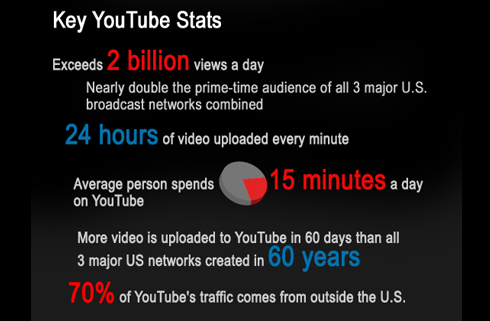
However it isn't only musicians and fans need social media tools, the tools need them too. According to a recent article from The Wall Street Journal, social media platforms are heavily dependent on music fans for growth. As a proof to this, Twitter Counter reports that 7 out of top 10 followed accounts belong to musicians. Lady Gaga, Justin Bieber, Katy Perry, Rihanna and Britney Spears are the top 5 followed celebrities on Twitter. FYI, Barack Obama is the 6th.

Twitter is encouraging the musicians to use Twitter as a main tool to communicate with their fans. Within the guide, they give such advises:
  • Include photos in your tweets
  • Create hashtags for your tours
  • Reply to your fans
It's interesting to see that the only reason Twitter cares about musicians isn't the growth. They are making money out of this. According to TechCrunch, Twitter signed a partnership with 3 music data services at the beginning of 2012 and will distribute tweets of verified musician accounts to be integrated into consumer apps.

At the end, it's a mutual relationship between musicians and Twitter. For musicians, Twitter isn't only about being discovered and followed by fans but also a way to connect with other artists and bands too. As John Paul Titlow from ReadWriteWeb explains, "For musicians today, especially smaller, independent artists, not taking full advantage of the social Web is a huge missed opportunity".


*EDM stands for Electronic Dance Music.